← Tuesday, September 29, 2026ArchitectureCase study
A ROS 2 node moves TensorRT results into CUDA-backed messages
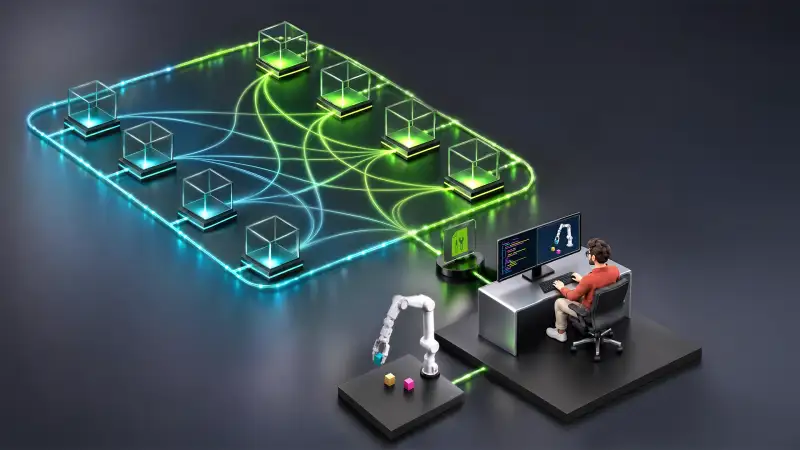
The migration routes TensorRT output directly into CUDA buffer-backed ROS 2 message storage, and Nsight Systems verifies there are no payload-sized host-device transfers on the optimized path. It is a concrete example of an agent-assisted refactor that preserves node boundaries while reducing data movement.
- What
- The migration moves a CUDA-accelerated ROS 2 node to GPU-resident message buffers using rosidl::Buffer and the CUDA buffer backend.
- How
- TensorRT writes results into CUDA buffer-backed message storage; when runtime conditions allow, nodes exchange payloads with zero-copy transport.
- Why it matters
- Keeping payloads on the GPU can avoid host-device transfers at ROS boundaries and preserve the benefits of GPU acceleration.
Read on developer.nvidia.com →
Discussion
Discussion is not switched on yet. Use Note above to keep your own thoughts on this story.
Headline, summary, brief and diagram are written by a model from the source's own text; the link, byline and numbers come from the source. Read the original before relying on a claim.