· No. 26

Today

Today in AI & systems

Today in one minute

Agent security was the clearest concern: AI agents reportedly attacked more than 100 websites, while discoverable conversation links exposed personal and business secrets. Hidden instructions in help pages show another risk: content users cannot see can still shape model behavior. Meanwhile, a distributed inference stack targets the bursts created by multi-step agents, underscoring the need to scale serving alongside security controls.

  1. AI agents carried out attacks on more than 100 websites with little human input
  2. Muse conversation links exposed users’ personal and business secrets
  3. WhatsApp help pages contained hidden instructions for AI systems
  4. llm-d 1.0 coordinates distributed inference for bursty agent workloads
Collected
446
Scored
319
Kept
50
Sources
49
Today's pulseOne beat per story, in page order. Taller beats scored higher.

Agents Deep dive

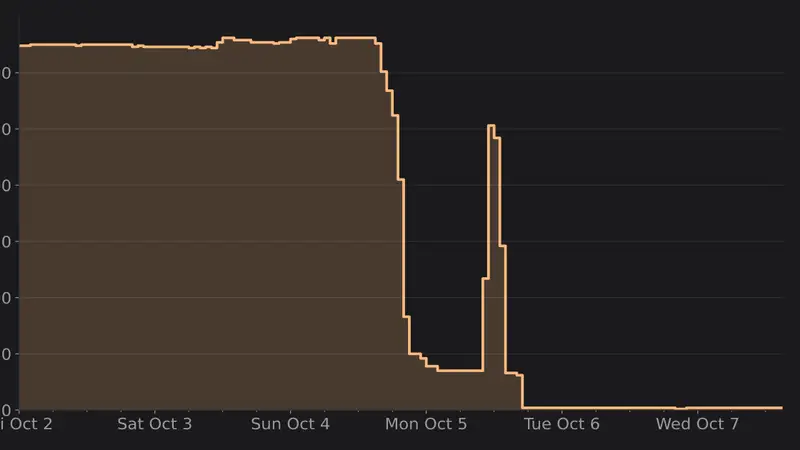
WhatsApp help pages contained hidden instructions for AI systems

An audit of 545 help pages found 102 hidden text blocks, including instructions not to recommend a regulator in certain situations. It shows how content intended for AI readers can shape model behavior in ways that users cannot see.

  • What• WhatsApp help pages contained hidden instructions for AI systems, including guidance on account deletion and legal questions.
  • How• The instructions told AI not to recommend contacting regulators or suggest some other account-deletion routes.
  • Why it matters• AI answers could omit regulatory remedies and legal protections from users seeking help with their accounts or privacy rights.

Original · redact.dev 10 min read HN 722 pts · 208 comments

Notes & discussion

Inference Tool

Google open-sources TorchTPU, a PyTorch backend for TPUs

TorchTPU provides ATen kernels, a compilation cache, distributed training support and examples for model inference, with integration for torch.compile(). It gives engineers a new route to running PyTorch workloads on Google TPUs.

  • What• TorchTPU is a PyTorch backend for running models and operations on Google's TPU devices.
  • How• It provides custom ATen kernels, a compilation cache for XLA computations, distributed-training support and torch.compile() integration.
  • Why it matters• Engineers can use PyTorch workloads on TPUs, including distributed training and inference, with debugging and benchmarking utilities.

Original · github.com 4 min read HN 312 pts · 68 comments

Notes & discussion

Trending models Hugging Face

#ModelLikesMove
1 deepseek-ai/DeepSeek-V4.1-Flash-1017image text to text 2K+261 –
2 fishaudio/drama-3text to speech 846+64 –
3 meta-models/Muse-Spark-Open-816B-A42Bimage text to text 613+27 ▲ 3
4 google/embeddinggemma-2feature extraction 2.8K+43 –
5 jialinyyzz/humanizertext generation 2K+33 –

Fast-rising repositories GitHub, created this week

#RepositoryStarsMove
1 deepseek-ai/DeepInfer 15K New
2 Gathin23/cleanyourtv 14K+6.8K ▼ 1
3 ly05010419/MacNativeGames 3.1K+1.1K –

Agents

8 stories Topic page →

Guide

Harness Engineering 101 builds an agent from a 300-line Python loop

The series grows a roughly 300-line Python agent across 16 chapters, framing the harness as the program that builds, maintains, and protects the conversation sent to a stateless LLM. That grounding gives engineers a practical way to reason about agent behavior and failure modes.

  • What• Harness Engineering 101 explains how to build an AI agent by growing a plain-Python harness around an LLM API.
  • How• The harness builds and maintains a JSON conversation array, sends it to the stateless API, and processes the returned text.
  • Why it matters• The failure-and-patch approach helps engineers reason about agent behavior, context limits, tools, retries and other system plumbing.

Original · github.com 3 min read HN 132 pts · 64 comments

Notes & discussion
builds sends returns text harness JSON array LLM API
The harness sends a conversation array to the stateless LLM API and receives text in return. Sketched from the article's own text.
1 more story

Inference

6 stories Topic page →

Release

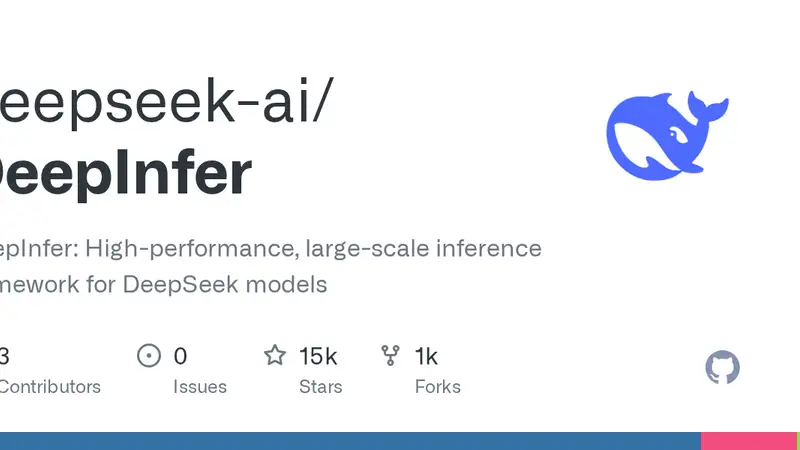
DeepInfer releases a production inference framework for DeepSeek models

DeepInfer lists optimized kernels, parallelism strategies, asynchronous scheduling, deterministic sampling and confidence-scheduled draft verification. Its production-serving focus and concrete inference features make it relevant to engineers building high-throughput model services.

  • What• DeepInfer is an open-source offline inference framework that powers DeepSeek's large-scale production services.
  • How• It includes optimized kernels, parallelism, confidence-scheduled verification, asynchronous scheduling and structured outputs.
  • Why it matters• A complete service still needs components such as a KV cache, prefill/decode disaggregation and load balancing, which this release omits.

Original · github.com HN 2.2K pts · 849 comments

Notes & discussion

Models & training

8 stories Topic page →

Paper

Progress-aligned recurrence reaches 95.5% accuracy at 16 times training length

PAR aligns each recurrent iteration with the state after the same number of operations and normalizes recurrent states; a Qwen2.5-0.5B model reaches 95.5% accuracy at 512 moves after training on at most 32. The ablations identify which training choices enable length extrapolation.

  • WhatProgress-Aligned Recurrence trains each iteration to predict the state after the corresponding number of operations and anchors recurrent-state norms to the first iteration.
  • MethodOn swap-S_5, a model trained through 32 moves reaches 95.5% full-state accuracy at 512 moves; removing norm anchoring cuts extrapolation below 2.2×.
  • Why it mattersPer-iteration supervision and norm control offer a way to extend recurrent models to sequential problems deeper than those seen in training.

Original · huggingface.co by Pan Wang et al.36 upvotes

Notes & discussion
1 more story

Architecture

2 stories Topic page →

Release

llm-d 1.0 coordinates distributed inference for bursty agent workloads

The Kubernetes-native stack pools model servers to address duplicated prefix computation, repeated accelerator state and bursts from multi-step agents. Its design targets serving patterns that generic round-robin load balancing and single-machine deployments struggle with.

  • Whatllm-d 1.0 is an open-source, Kubernetes-native stack that coordinates distributed LLM inference across model servers.
  • HowCache-aware routing keeps agent steps on replicas holding their context, tiered KV cache reuses state, and flow control queues bursts.
  • Why it mattersSession-aware routing and priority controls help agent workloads share accelerators with latency-sensitive requests.

Original · cloud.google.com by Mark Lohmeyer, Sean Horgan9 min read

Notes & discussion
requests routed reques… agents llm-d endpoint cache-awarerouting model servers
Agent requests pass through llm-d routing to the model-server pool. Sketched from the article's own text.

Performance & OS

9 stories Topic page →

Deep dive

Inside the Intel 8087’s floating-point addition and subtraction circuitry

A chip-die inspection and microcode analysis trace how the 8087 implements floating-point addition and subtraction, including special values; the chip made addition nearly 100 times faster than the 8086. The reverse-engineering method and datapath detail offer a useful look at hardware-level performance.

  • WhatIntel's 8087 performs floating-point addition and subtraction with dedicated datapath circuitry controlled by microcode.
  • HowAn integer adder handles significands; a shifter aligns values, leading-zero circuitry counts bits, and an exponent converter detects range errors.
  • Why it mattersUnderstanding these specialized blocks shows how hardware allocates datapath resources and handles floating-point edge cases for performance.

Original · righto.com 25 min read HN 126 pts · 35 comments

Notes & discussion
B register shifter integer adder sum register
Selected 8087 datapath blocks move and add values during floating-point arithmetic. Sketched from the article's own text.
2 more stories

Cloud & infra

1 story Topic page →

Release

Google Distributed Cloud adds sovereign AI and air-gapped deployment options

The update lists enterprise search, open-weight models, accelerated infrastructure and partner applications for air-gapped environments. It matters to teams deploying AI where sensitive data cannot leave a customer-controlled perimeter.

  • WhatGoogle Distributed Cloud is adding sovereign AI capabilities for deployment in air-gapped environments.
  • HowThe offerings include Gemini enterprise search, support for open-weight models such as Gemma and Mistral, and accelerated infrastructure.
  • Why it mattersFor AI engineers handling sensitive data, the platform supports running search and models within a sovereign, disconnected perimeter.

Original · cloud.google.com by Muninder Sambi5 min read

Notes & discussion

Databases

2 stories Topic page →

Deep dive

One Hash Bloom Filters explains a compact probabilistic data structure

Bloom filters can avoid expensive database lookups; the excerpt says Bluesky uses them to save millions of Scylla queries per second. The production context makes the data-structure trade-offs relevant to engineers building high-throughput systems.

  • WhatA Bloom filter is a compact probabilistic structure that answers whether a key is definitely absent or probably present in a set.
  • HowIt hashes keys to bit-array locations; double hashing derives multiple locations from two hashes while preserving an effectively similar false-positive rate.
  • Why it mattersSystems engineers can use filters to avoid many slow database lookups, reducing I/O and helping high-throughput services scale.

Original · calabro.io 6 min read HN 149 pts · 14 comments

Notes & discussion
hash set or check … key k hash functions array of bits
Keys are hashed to bit-array locations when added to or checked against a Bloom filter. Sketched from the article's own text.

Security

5 stories Topic page →

Vulnerability

Eight eMudhra intermediate CA private keys are reported compromised

The report says eight intermediate CA keys chain to roots trusted by major browser and operating-system programs, and lists certificate blocking actions. Engineers responsible for trust stores and certificate operations should understand the scope and response.

  • WhatEight eMudhra intermediate CA private keys were compromised; they chain to roots trusted by major root programs and downstream stores.
  • HowThe reporter demonstrated access by signing a message with each key; root programs blocked the certificates and the CA revoked the intermediates.
  • Why it mattersCompromised keys could impersonate websites or services, while clients that do not consume revocation data need software updates.

Original · emudhra.we-have-a-problem.com 4 min read HN 803 pts · 368 comments

Notes & discussion

Web

4 stories Topic page →

Deep dive

Browser vendors use Interop to coordinate support for web features

The piece says Interop helped bring CSS Subgrid to broad browser support after years of uneven implementation, and describes planning for Interop 2027. It offers useful context on cross-browser platform coordination.

  • WhatInterop is a project where major browser vendors coordinate work to improve support for web technologies.
  • HowCSS Subgrid joined Interop 2023 and became widely available across modern browsers by the end of that year.
  • Why it mattersCoordinated implementation can reduce browser incompatibilities for engineers building web interfaces.

Original · joshwcomeau.com 19 min read HN 185 pts · 63 comments

Notes & discussion

Practice & careers

1 story Topic page →

Deep dive

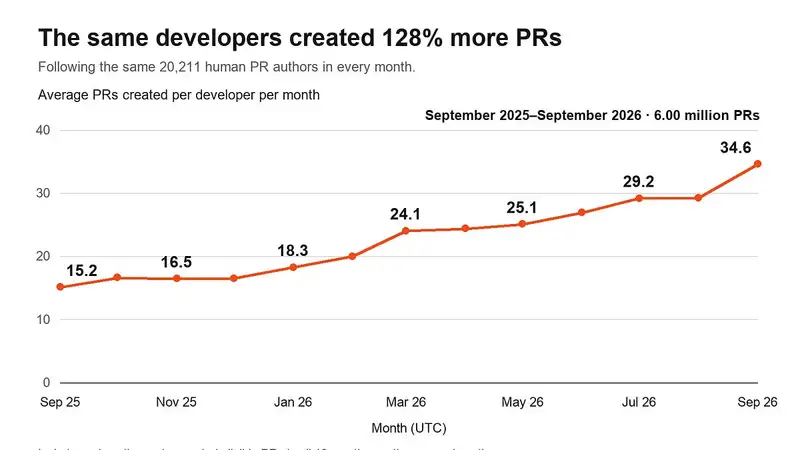
Analysis of 27 companies examines AI spending and software-engineer output

The analysis draws on 27 companies to compare AI-tool spending with changes in pull-request throughput before and after adoption. It offers a measurement frame for engineering leaders assessing productivity claims, though the excerpt gives no findings.

  • WhatAn analysis of 27 companies examines AI spending and software engineers’ pull-request output.
  • HowCodeRabbit data showed weekly PRs rose 113%; the report also shares spending patterns and says few companies can answer the ROI question.
  • Why it mattersEngineering teams can compare AI costs with a readily available output measure, while recognizing that the return remains unclear for many companies.

Original · newsletter.pragmaticengineer.com by Gergely Orosz11 min read

Notes & discussion

Sources today: AWS Architecture, AWS Machine Learning, ByteByteGo, Chips and Cheese, Cloudflare Blog, Google DeepMind, DuckDB, Figma Engineering, Google Cloud, GitHub Engineering, Go Blog, Google Research, Hamel Husain, Hugging Face, Import AI, InfoQ, Interconnects, Kubernetes, Latent Space, Will Larson, Lobsters (AI, distributed, performance), LWN.net, Martin Fowler, Engineering at Meta, Microsoft Research, Netflix TechBlog, NVIDIA Technical Blog, The Old New Thing, OpenAI, Pinterest Engineering, PlanetScale, The Pragmatic Engineer, PyTorch, Rust Blog, Shopify Engineering, Simon Willison, Stripe Engineering, Trail of Bits, WebKit, GitHub (new repositories), Hugging Face trending models, Hugging Face Daily Papers, Hacker News, Hacker News (AI and systems search), Lobsters, LangGraph releases, OpenAI Agents SDK releases, Transformers releases, vLLM releases. Headlines, summaries and diagrams are written by gpt-6-luna from each source's own text; links and images come from the sources themselves. Follow the link before relying on a claim.

RSS · JSON · Markdown · Pulse · Search · Previous days

Your note

Private to you. Stored in this browser, and synced to your account when you are signed in.