· No. 22

Saturday, October 17, 2026

The day in one minute

Agent work today was about operational discipline as much as capability. Claude Code more than doubled merged pull requests while reducing the share reverted, as its team shifted more review to machines and emphasized fast reversals. Harness prompt edits could break caching and sharply increase prefill work and request energy. Evaluations are also moving beyond final answers to execution steps and ambiguous, end-to-end customer delivery.

  1. Claude Code doubled merged pull requests while cutting revert share by over 40%
  2. Harness prompt edits can multiply inference prefill work and energy
  3. Agent evaluations should grade execution steps, not just final answers
  4. FDE-Gym benchmarks agents on ambiguous, end-to-end customer delivery
Collected
474
Scored
320
Kept
50
Sources
46
Today's pulseOne beat per story, in page order. Taller beats scored higher.

Agents Case study

Claude Code doubled merged pull requests while cutting revert share by over 40%

From June to September, Claude Code's merged pull requests more than doubled while the share reverted fell by over 40%; the team shifted much review to machines and emphasized fast reversals. These are practical production lessons for reviewing code at agent-generated volume.

  • WhatClaude Code’s review process aims to minimize human review time without increasing reverts or incidents.
  • HowClaude reviews and fixes most routine changes before a human looks; revert and incident rates serve as guardrails.
  • Why it mattersFor AI teams shipping many changes, automated checks can preserve human attention for issues that need human judgment.


Original · claude.dev 15 min read HN 296 pts · 274 comments

Notes & discussion

Inference Tool

PS5LM serves GGUF models from a jailbroken PS5 using llama.cpp

PS5LM runs llama.cpp's Vulkan backend on the PS5 GPU, uses 11.4 GB of shared memory, and exposes OpenAI- and Anthropic-compatible APIs to devices on the network. It is a concrete edge-inference deployment, though tied to jailbroken console hardware.

  • WhatPS5LM runs GGUF language and decision models on a jailbroken PS5 and serves them to devices on the network.
  • HowIt uses llama.cpp's Vulkan backend on the console's RDNA 2 GPU, and supports OpenAI and Anthropic APIs as well as a browser chat page.
  • Why it mattersIt gives engineers a private, local endpoint for testing models and clients without a PC running alongside the console or a cloud service.

Original · github.com 4 min read HN 247 pts · 63 comments

Notes & discussion

Trending models Hugging Face

#ModelLikesMove
1 google/embeddinggemma-2feature extraction 2.5K+93 –
2 jialinyyzz/humanizertext generation 1.8K+79 –
3 openbmb/MiniCPM-V-4.7-35B-A3Bimage text to text 859+56 –
4 fishaudio/drama-3text to speech 563+68 –
5 meta-models/Muse-Spark-Open-816B-A42Bimage text to text 456+151 ▲ 5

Fast-rising repositories GitHub, created this week

#RepositoryStarsMove
1 jhaizhou-ops/d2r-mobile 3.6K+270 –
2 onehumanbeing/esp32-iphone-agent 2.9K+284 –
3 Arekejoker/qwen21-nsfw-pose-skill 2.6K+383 ▲ 1

Agents

9 stories Topic page →

Paper

OpenGCUA moves computer-use observations and task decisions into the model

OpenGCUA’s first release uses code execution for computer interaction and transfers selected observation and task-state decisions from fixed harness rules to the model; its full configuration improves scores across all eight evaluated models. The open stack offers concrete harness design choices for computer-use agents.

  • WhatOpenGCUA is an open-stack project for generalist computer-use agents that work through visual and programmatic interfaces.
  • MethodIts design uses code execution for intermediate results and transfers some observation and task-state decisions from fixed harness rules to the model.
  • Why it mattersOn OSWorld-v2, the full configuration raised mean partial score by 19.6 points and reduced reported steps per task by 53% versus batched GUI-only execution.

Original · huggingface.co by Hanzhang Zhou et al.295 upvotes Code · 26 stars

Notes & discussion
observe or act operations execute code intermediate results model visualinterfaces programmaticinterfaces Code execution
The model uses computer interfaces and code execution, with results informing later operations. Sketched from the article's own text.
2 more stories

Inference

3 stories Topic page →

Paper

MJev-Spatial replaces spatial answer generation with one-pass classification

MJev-Spatial scores candidate answers using pretrained query and key projections, handling choices, numeric values, and points without generating answer tokens. A single forward pass for each decision could reduce latency in spatial tasks that require frequent interaction.

  • WhatMJev-Spatial is a multimodal decision model for spatial relation, distance, and point-prediction tasks.
  • MethodIt scores candidate answers with pretrained query and key projections, using coarse-to-fine classification for numerical and point predictions.
  • Why it mattersSingle-pass classification avoids answer-token generation and parsing, which can matter for agents making spatial judgments at interaction rates.

Original · huggingface.co by Luozheng Qin et al.175 upvotes Code · 7 stars

Notes & discussion

Models & training

10 stories Topic page →

Deep dive

Transformer layers emerge from viewing attention and MLPs as memory stores

The explanation models layers as memory stores, deriving capacity limits for linear retrieval and presenting an MLP as a nonlinear memory store that suppresses weak matches. This offers engineers an intuitive way to reason about interference and transformer components.

  • WhatThe post explains transformer layers as memory stores, connecting attention and MLPs to key-value recall.
  • HowAn MLP applies a nonlinear function to key similarities before combining values, suppressing low-similarity memories.
  • Why it mattersThis view helps engineers reason about how model layers store and retrieve information, and how activation choices affect interference.

Original · alexwang.ai 11 min read HN 217 pts · 60 comments

Notes & discussion
similarity similarity weighted reca… input x keys nonlinearfunction σ values
An MLP gates key similarities before combining the corresponding values. Sketched from the article's own text.
3 more stories

Architecture

3 stories Topic page →

Performance & OS

5 stories Topic page →

Deep dive

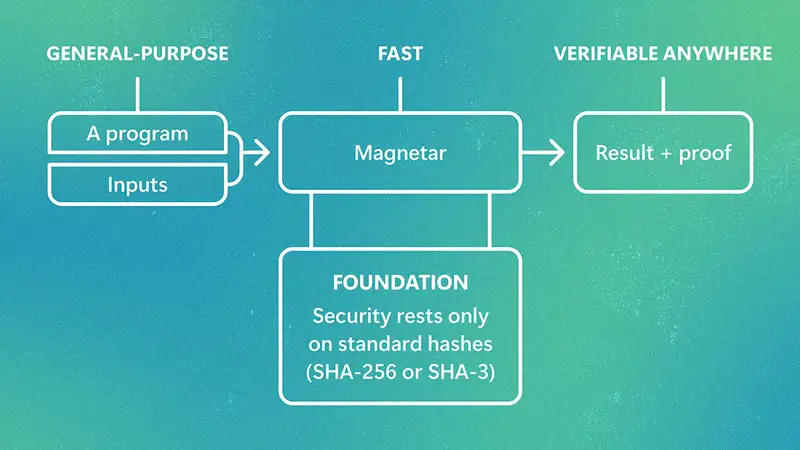
Magnetar proves Rust, Go, and C programs 10 to 39 times faster than prior systems

Magnetar generates verifiable proofs for Rust, Go, and C workloads, runs 10–39 times faster on average than prior comparable systems, and relies only on standard hash functions. Practical proofs could reduce trust requirements when executing workloads across systems.

  • WhatMagnetar proves program execution, producing a short proof alongside the result that others can check without rerunning the program.
  • HowIt proves Rust, Go, and C programs and runs 10 to 39 times faster on average than prior comparable systems, using standard hash functions for security.
  • Why it mattersProving ordinary programs as written could help engineers verify agent actions or transactions without exposing private inputs.

Original · microsoft.com by Srinath Setty8 min read

Notes & discussion
produces produces checked by program result proof Anyone
A program produces a result and proof that anyone can check. Sketched from the article's own text.

Cloud & infra

1 story Topic page →

Deep dive

RFC 8950 carries IPv4 routes over IPv6 next hops without tunnels

The setup lets IPv6-only network cores exchange IPv4 routes over IPv6 BGP sessions, leaving IPv4 at network edges without tunnels. It offers a practical path to reduce IPv4 configuration across backbones and IXPs.

  • What- RFC 8950 lets MP-BGP announce IPv4 routes with IPv6 next-hops, carrying IPv4 over an IPv6 network without tunnels.
  • How- IPv6 reachability uses NDP, while IPv4 packets remain IPv4 on the wire and travel over Ethernet to the MAC found by NDP.
  • Why it matters- This lets backbone operators run IPv6-only cores while continuing to exchange IPv4 routes with customers and peers.

Original · anuragbhatia.com 5 min read HN 102 pts · 63 comments

Notes & discussion
route route route route C1 R1 R2 R3 C2
The lab’s route path connects IPv4-only edges through an IPv6-only provider core. Sketched from the article's own text.

Databases

2 stories Topic page →

Postgres 19 slips to November after developers drop up to 10 features

Postgres 19 is now expected around November 19, with eight to ten significant features deferred after AI review tooling surfaced more bugs than developers could fix. The delay is a useful example of how review capacity and tooling can affect a major database release.

  • What- PostgreSQL 19 has been delayed until around November 19, with eight to 10 significant features postponed to PostgreSQL 20.
  • How- LLM-assisted code review surfaced architectural defects and many edge-case issues, creating more fixes to handle during the release window.
  • Why it matters- Teams adopting LLM code review need to account for defect triage and repair time; the additional findings contributed to release delays.

Original · theregister.com 3 min read HN 194 pts · 76 comments

Notes & discussion

Security

6 stories Topic page →

Deep dive

Supply-chain attackers tampered with update servers in five-to-ten-minute windows

Investigators found repeated brief changes to AOMEI update infrastructure that reverted to authentic files after five to ten minutes, delivering a multi-stage payload. The short windows show why point-in-time scans can miss supply-chain compromises.

  • WhatA campaign targeted AOMEI Technology's update infrastructure between April and July 2026.
  • HowAttackers tampered with origin-server configurations for five to ten minutes, then restored authentic versions; the campaign delivered CROSSROAD and SHINYROAD.
  • Why it mattersBrief tampering windows evaded point-in-time triage and automated file scanning, so update-integrity monitoring must account for changes that quickly revert.

Original · cloud.google.com by Mandiant, Google Threat Intelligence Group23 min read

Notes & discussion
HTTPS poll HTTPS poll download URL Backupper.exe ABNotify.exe down_html.ini upgrade-now.zip
AOMEI update services poll configuration and use it to locate the update package. Sketched from the article's own text.

Languages & tools

4 stories Topic page →

Deep dive

C++26 standardizes programmatic debugger breakpoints in a new header

C++26 adds a <debugging> header to replace platform-specific breakpoint code that projects have repeatedly implemented themselves. Standardizing this tooling behavior can reduce portability work across C++ codebases.

  • What- C++26 adds a <debugging> header with breakpoint(), is_debugger_present(), and breakpoint_if_debugging().
  • How- The functions are noexcept and freestanding; is_debugger_present() checks on each call and can be replaced for platforms without OS-level debugger detection.
  • Why it matters- Standardized breakpoint APIs can replace platform-specific code that projects and test frameworks have been implementing themselves.

Original · sandordargo.com 4 min read HN 86 pts · 14 comments

Notes & discussion

Web

1 story Topic page →

Tool

Proa uses typed components for HTML and Markdown rendering in Rust

The Rust framework renders typed components to multiple targets and promotes server rendering with selective interactivity; its showcase includes GitHub, Sentry and Airbnb recreations. It may interest engineers evaluating a new web architecture, though the excerpt gives no benchmark results.

  • What- Proa is a Rust web framework built around composable components that render to multiple targets.
  • How- A typed component can implement separate renderers for HTML and Markdown; the framework also supports selective interactivity.
  • Why it matters- Reusing typed components across render targets can help engineers build applications that serve different output formats.

Original · proa.so 6 min read HN 105 pts · 34 comments

Notes & discussion
render output render output ProductCard WebRenderSync MdRenderSync HTML Markdown
Proa sends one component through separate renderers to produce HTML or Markdown. Sketched from the article's own text.

Practice & careers

2 stories Topic page →

Case study

Chromium developer compares work at Google and Igalia

A Chromium developer contrasts working on the browser at Google and employee-owned cooperative Igalia, focusing on how organizational differences affect work on the codebase. It offers lessons about sustaining large open-source engineering efforts across different company structures.

  • What- Chromium developer Sharon Yang compared working on the browser at Google and Igalia, where she now works on the same code base.
  • How- Google is a much larger, investor-owned company; Igalia is an employee-owned cooperative where all employees are paid the same.
  • Why it matters- The comparison illustrates how different company structures can support work on shared open-source projects such as Chromium.

Original · lwn.net 13 min read HN 87 pts · 27 comments

Notes & discussion

Sources today: Airbnb Engineering, AWS Architecture, AWS Machine Learning, ByteByteGo, Cloudflare Blog, Google DeepMind, DuckDB, Figma Engineering, Google Cloud, GitHub Engineering, Go Blog, Google Research, Hugging Face, Import AI, InfoQ, Jane Street Tech, Kubernetes, Latent Space, Lobsters (AI, distributed, performance), LWN.net, Martin Fowler, Engineering at Meta, Microsoft Research, Metadata (Murat Demirbas), Netflix TechBlog, NVIDIA Technical Blog, The Old New Thing, OpenAI, PlanetScale, Postgres Weekly, The Pragmatic Engineer, PyTorch, Rust Blog, Simon Willison, Stripe Engineering, Trail of Bits, GitHub (new repositories), Hugging Face trending models, Hugging Face Daily Papers, Hacker News, Hacker News (AI and systems search), Lobsters, LangGraph releases, OpenAI Agents SDK releases, Transformers releases, vLLM releases. Headlines, summaries and diagrams are written by gpt-6-luna from each source's own text; links and images come from the sources themselves. Follow the link before relying on a claim.

RSS · JSON · Markdown · Pulse · Search · Previous days

Your note

Private to you. Stored in this browser, and synced to your account when you are signed in.