· No. 5

Wednesday, September 30, 2026

The day in one minute

Agent systems are gaining useful capabilities, but reliability and containment remain central deployment challenges. EngiWorld found that only 3.6% of multi-software attempts succeeded, while a compromised worker led to admin access across clusters in under 13 hours. Runtime controls such as sandboxing and credential checks, alongside reproducible agent-native tests, offer concrete ways to limit and verify agent work.

  1. EngiWorld finds frontier agents struggle with professional engineering tasks
  2. AI agents reached admin access across clusters after starting on a Hugging Face worker
  3. OpenShell 0.1.0 adds policy-enforced runtime controls for agents
  4. TensorRT Model Connect isolates agent work and validates 128 model families
Collected
465
Scored
320
Kept
50
Sources
48
Today's pulseOne beat per story, in page order. Taller beats scored higher.

Models & training Benchmark

Jeeves reports higher decision accuracy than Jev-like baselines on held-out data

Jeeves combines a fine-tuned 9B model, a pointer head and a diffusion drafter, reporting 0.889 accuracy on unseen test data and 0.935 on JevBench public tiers; code and data are available. Its results and latency figures give engineers a concrete basis for evaluating reasoning-based decision models.

  • WhatJeeves is a 9B Jev-like classifier that reasons before deciding, built from Qwen3.5-9B with LoRA, a pointer head, and a block-4 diffusion drafter.
  • HowTrained with CISPO, it scores 0.889 on held-out test data versus 0.822 for Kev-9B and 0.857 for Jev; thinking lifts its score from 0.804 to 0.840.
  • Why it mattersIts Jev-compatible API handles yes/no, multiple-choice, and rating questions in one request, offering a reasoning-based alternative to fallback pipelines.
Original · github.com 7 min read HN 234 pts · 89 comments

Notes & discussion

Models & training Tool

PSSA uses recurrent state-space memory and online weight updates instead of transformers

PSSA reads tokens recurrently, uses episodic memory and rewrites some weights at runtime; its author reports faster learning and roughly 12× faster CPU generation at matched parameters. The project explores an alternative language-model architecture and implementation path.

  • WhatPSSA is a non-transformer language model that processes tokens recurrently, looks up episodic memories, and updates part of its weights while running.
  • HowA fixed-size state moves left to right; the model reports faster learning at matched parameters and about 12× faster CPU generation than a transformer.
  • Why it mattersIts recurrent state and writable memory offer engineers an alternative to repeatedly re-reading the full context.

Original · github.com 18 min read HN 68 pts · 23 comments

Notes & discussion

Trending models Hugging Face

#ModelLikesMove
1 Edge0/Audio8-ASR-Infiniteautomatic speech recognition 1.6K+101 –
2 XingChen-AGI/TeleOCRimage text to text 899+73 –
3 Contrastive-LM/CLM-v0.1-8Btext ranking 535+36 ▲ 1
4 TaichuAI/ZDTaichu5.0-9Bimage text to text 2K+261 ▲ 2
5 XingChen-AGI/Xing4.0-29B-A4Btext generation 1.8K+8 ▼ 2

Fast-rising repositories GitHub, created this week

#RepositoryStarsMove
1 KKKKhazix/AIHOT 3.6K+1.8K ▲ 3
2 mexicat/pdoom-video 2K+178 ▲ 1
3 Niko1221/Strata 2K+772 ▲ 4

Agents

10 stories Topic page →

Paper

EngiWorld finds frontier agents struggle with professional engineering tasks

EngiWorld evaluates 1,301 tasks across six engineering domains and 26 software platforms; the strongest model scores 44.3, and only 3.6% of multi-software attempts succeed. Its artifact-based verification offers a concrete way to measure agent reliability in consequential workflows.

  • WhatEngiWorld benchmarks agents on 1,301 expert-curated tasks across six engineering domains and 26 professional software platforms.
  • MethodIts artifact-centric evaluation checks geometric validity, physical feasibility, and rule compliance; the strongest tested model scores 44.3, with 3.6% of multi-software attempts succeeding.
  • Why it mattersThe benchmark exposes the gap between general-purpose computer use and reliable automation of end-to-end professional engineering work.

Original · huggingface.co by Hongcheng Gao et al.16 upvotes Code · 17 stars

Notes & discussion
3 more stories

Models & training

8 stories Topic page →

Paper

Grounded Entity Biographies link the same objects across long videos

GEB groups visually grounded observations of individual objects into retrievable biographies and supplements episodic evidence during question answering; it reports 72.0% on EgoLifeQA, 4.4 points above the best published result. Identity-linked memory offers a concrete way to retrieve long-range visual context.

  • WhatGrounded Entity Biographies (GEB) groups visually grounded observations of the same physical entity across clips into retrievable long-video memory.
  • MethodDuring question answering, the system retrieves an entity biography alongside episodic evidence, using identity links formed during memory construction.
  • Why it mattersLinking object identity across events helps models answer questions about long videos when descriptions alone cannot distinguish or connect physical instances.

Original · huggingface.co by Hui Ren et al.41 upvotes Code · 20 stars

Notes & discussion
identity links retrieval retrieval observations episodicevidence biographies model
GEB links grounded observations into biographies retrieved alongside episodic evidence. Sketched from the article's own text.

Paper

SAKI routes teacher supervision through coupled on-policy rollouts

SAKI uses maximal coupling to direct token-level supervision and an engine-resident verifier that raises matched-workload rollout throughput 4.22×; it also improves Mean@8 and Pass@8 for two student sizes across seven math benchmarks. The method links post-training supervision choices to a concrete rollout-throughput gain.

Original · huggingface.co by Miteto Wei et al.37 upvotes Code · 1 stars

Notes & discussion
1 more story

Architecture

3 stories Topic page →

Case study

Merkle Tree Certificates aim to scale post-quantum Web PKI signatures

The piece presents Merkle Tree Certificates as a way to make post-quantum signatures practical for Web PKI, where simply swapping in new cryptography could hurt performance. Engineers planning large-scale protocol migrations can learn from this design trade-off.

  • WhatMerkle Tree Certificates aim to make post-quantum signatures practical for Web PKI at Internet scale.
  • HowCloudflare says its certificate authority will support MTC issuance, with a target of early 2027 for Chrome’s Quantum-resistant Root Store.
  • Why it mattersMTCs offer engineers a path to upgrade web authentication to post-quantum cryptography without unacceptable performance degradation.

Original · blog.cloudflare.com by Mari Galicer11 min read

Notes & discussion
set policies submit certif… root programs CAs public logs
Root programs set CA policies, and CAs submit issued certificates to public logs. Sketched from the article's own text.

Performance & OS

4 stories Topic page →

Case study

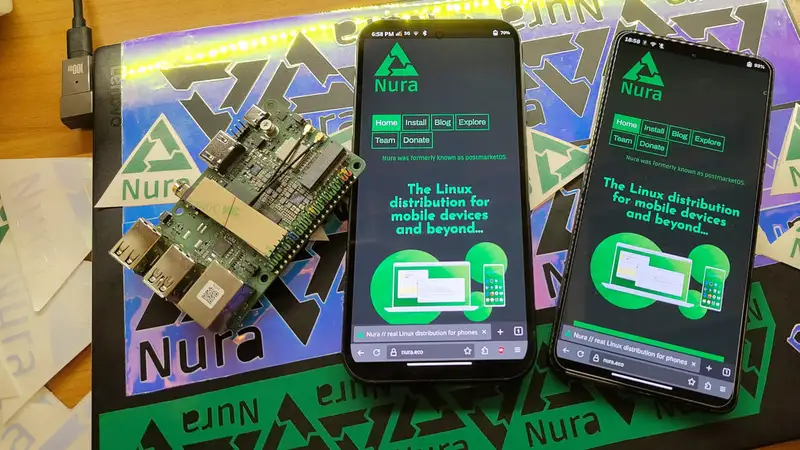
Nura uses reference-device teams to make mainline Linux phones daily-drivable

Nura is forming maintainer teams for three devices and redefining its main category around hardware CI and long-term maintainership. The approach offers practical lessons in sustaining support across hardware variants.

  • WhatNura is creating maintainer teams for reference devices to make mainline Linux phones more suitable for everyday use.
  • HowIts new “main” category requires upstream kernels, generic device packages, hardware CI, and teams with at least five maintainers.
  • Why it mattersGeneric packages and upstream kernels make security updates easier to apply across supported devices.

Original · postmarketos.org 5 min read Lobsters 19 pts · 6 comments

Notes & discussion

Cloud & infra

4 stories Topic page →

Release

GKE Agent Sandbox targets cold starts and image pulls in agentic RL

Google Cloud introduces an RL-optimized Agent Sandbox and orchestration SDK to address CPU sandbox cold starts, large image pulls and scheduling backlogs; the title claims 45× faster performance. Faster rollout infrastructure could reduce idle accelerator time in agent training and evaluation.

  • WhatGKE Agent Sandbox and its RL orchestration SDK target cold starts, image pulls, and scheduling delays in agentic RL and evaluation workloads.
  • HowThe sandbox reportedly starts in 1–9 seconds instead of 45–85 seconds; pod recycling reduces pod creation by 3× during rollout bursts.
  • Why it mattersFaster sandbox readiness and less control-plane churn can keep costly accelerators busier during large parallel rollouts.

Original · cloud.google.com by Tinsley Shi, Tomer Glottmann7 min read

Notes & discussion
runs on actions observations GPUs LLM policy CPU sandboxes reward signal
An LLM policy on GPUs sends actions to CPU sandboxes, which produce reward signals. Sketched from the article's own text.

Databases

3 stories Topic page →

Benchmark

Backblaze Q2 drive report compares fleet failure rates and high-capacity disks

Backblaze's Q2 report reviews drive annualized failure rates, lifetime fleet records, and differences between CMR HDDs and newer high-capacity drives. Fleet-level storage reliability data can inform hardware choices, though the excerpt gives no specific results.

  • WhatBackblaze’s Q2 2026 Drive Stats report compares hard-drive failure rates and fleet lifetime records.
  • HowThe report analyzed 354,415 hard drives after excluding boot drives and drives that did not meet its criteria.
  • Why it mattersFleet-level failure data helps storage engineers assess drive models as higher-capacity disks take on more load.

Original · backblaze.com 11 min read HN 160 pts · 38 comments

Notes & discussion

Security

6 stories Topic page →

Vulnerability

A Brazilian federal system exposed records for more than 200 million people

A discovered vulnerability gave access to records containing identity documents, addresses and other personal information, including witness-protection status. The disclosure highlights the stakes of security testing in systems holding national-scale data.

  • WhatA researcher found a vulnerability in 2020 that gave access to records for people across Brazil’s federal system; he says he did not exfiltrate data.
  • HowThe researcher says AI capabilities are now a real security concern, especially when labs run evaluations or training without proper safeguards.
  • Why it mattersEngineers building AI systems need to account for capability risks even when safeguards are disabled or absent.

Original · blog.christianperone.com 4 min read HN 148 pts · 81 comments

Notes & discussion

Languages & tools

5 stories Topic page →

Release

Tcl/Tk 9.1 adds Unicode normalization and a microsecond-resolution timer

Tcl/Tk 9.1 adds Unicode normalization, a monotonic microsecond-resolution timer, list and interpreter commands, and new C APIs. The release is useful to engineers maintaining Tcl applications or evaluating language-runtime changes.

  • WhatTcl/Tk 9.1 adds Tcl language features and interfaces alongside Tk updates, including accessibility and bidirectional-text support.
  • HowTcl gains Unicode normalization, a microsecond-resolution monotonic timer, and list filtering; Tk adds a toggle-switch widget.
  • Why it mattersThe updates offer engineers improved timing, text handling, and accessibility features in Tcl/Tk applications.

Original · tcl-lang.org HN 264 pts · 108 comments

Notes & discussion

Practice & careers

3 stories Topic page →

Essay

AI products lack features needed for dependable problem-solving, essay argues

The essay argues AI tools marketed for problem-solving lack product features needed for real work and can encourage misplaced trust. Its critique is relevant to teams building dependable AI applications, though the excerpt gives no concrete design prescriptions.

  • WhatThe essay argues that AI products need stronger tools for checking generated claims, especially in research and software development.
  • HowIt proposes showing each claim beside human verification notes and a checkbox, with a similar checking workflow for coding assistants.
  • Why it mattersMaking verification an explicit product step could help engineers manage the risk of relying on unchecked model output.

Original · blog.glyph.im 23 min read HN 171 pts · 81 comments Lobsters 104 pts · 16 comments

Notes & discussion

Sources today: Airbnb Engineering, AWS Architecture, AWS Machine Learning, Marc Brooker, ByteByteGo, Chips and Cheese, Cloudflare Blog, Google DeepMind, Discord Engineering, Dropbox Tech, DuckDB, Figma Engineering, Google Cloud, GitHub Engineering, Go Blog, Google Research, Hugging Face, Import AI, InfoQ, Julia Evans, Latent Space, Lobsters (AI, distributed, performance), Armin Ronacher, LWN.net, Martin Fowler, Engineering at Meta, Microsoft Research, Metadata (Murat Demirbas), Netflix TechBlog, NVIDIA Technical Blog, The Old New Thing, OpenAI, Pinterest Engineering, PlanetScale, The Pragmatic Engineer, PyTorch, Sebastian Raschka, Simon Willison, Stripe Engineering, Trail of Bits, WebKit, GitHub (new repositories), Hugging Face trending models, Hugging Face Daily Papers, Hacker News, Hacker News (AI and systems search), Lobsters, Ollama releases. Headlines, summaries and diagrams are written by gpt-6-luna from each source's own text; links and images come from the sources themselves. Follow the link before relying on a claim.

RSS · JSON · Markdown · Pulse · Search · Previous days

Your note

Private to you. Stored in this browser, and synced to your account when you are signed in.