· No. 9

Sunday, October 4, 2026

The day in one minute

Agent reliability is today’s throughline, from measuring tool use accurately to keeping long-running work under control. Strict checks found that similar benchmark scores could hide a sharp gap in valid tool calls, while a review of an agent eval tool found it prompted users to build graders before inspecting traces. Hard usage caps and checkpointed tasks address the operational side: limiting billable actions and resuming after failures.

  1. Strict tool-call checks expose false positives in small-model benchmarks
  2. Claude’s eval tool builds graders but prompts users to choose failures before reviewing data
  3. Hard budget caps can limit runaway spending by coding agents
  4. Pi Durable checkpoints agent tasks so they can resume after failures
Collected
504
Scored
320
Kept
50
Sources
49
Today's pulseOne beat per story, in page order. Taller beats scored higher.

Agents Essay

Hard budget caps can limit runaway spending by coding agents

Hard usage caps would stop pay-by-usage APIs and services once a set monthly limit is reached, unlike warning-only soft caps. This is a practical safeguard for agents that can autonomously trigger billable compute, storage, or API calls.

  • WhatHard budget caps stop a pay-by-usage service after a configured monthly amount, returning errors instead of allowing further charges.
  • HowCoding and personal agents can launch services that incur paid API, hosting, storage, or compute costs; soft warning caps may arrive too late.
  • Why it mattersHard caps can limit financial exposure when agents deploy or operate systems, while uncapped spending remains an opt-in choice.

Original · simonwillison.net 3 min read HN 375 pts · 184 comments

Notes & discussion

Performance & OS Tool

C++ Insights transforms source code to expose compiler-generated constructs

The Clang-based tool rewrites C++ to show constructs such as defaulted constructors, assignment operators and casts that the compiler supplies. It can help engineers inspect language behavior that is otherwise implicit.

  • WhatC++ Insights is a Clang-based source-to-source tool that makes compiler-generated constructs visible in transformed code.
  • HowIt exposes special member functions, casts, operator calls, and inferred types such as auto or decltype.
  • Why it mattersSeeing transformations in C++ rather than an AST or assembly can help engineers understand how compiler behavior affects their code.

Original · github.com 6 min read HN 156 pts · 31 comments

Notes & discussion

Trending models Hugging Face

#ModelLikesMove
1 Cloudflare/clefimage text to text 1K+205 –
2 Cloudflare/clef-flashimage text to text 372+87 ▲ 2
3 Qwen/Qwen3.8-27Bimage text to text 17K+77 –
4 Contrastive-LM/CLM-v0.1-8Btext ranking 694+21 ▼ 2
5 Aleph-Alpha/Kolibri-1text generation 278 New

Fast-rising repositories GitHub, created this week

#RepositoryStarsMove
1 KKKKhazix/AIHOT 5.5K+519 –
2 rehan-remade/universal-modder 2.7K+474 ▲ 2
3 CopilotKit/OpenDots 2.7K+1.1K ▲ 2

Agents

9 stories Topic page →

Guide

Claude Opus 5.5 guidance emphasizes clear goals for long runs

The guide recommends handing over a full task, defining what completion means, and letting Opus 5.5 run before reviewing what it needs from you. These practices offer concrete ways to steer and check longer Claude Code sessions.

  • WhatThe Opus 5.5 guide recommends giving a whole task in one message, defining what completion means, and specifying when the model should stop and ask.
  • HowIt says Opus 5.5 can sustain longer multi-step work and advises removing generic instructions to “think carefully,” since the model already thinks before replying.
  • Why it mattersClear finish lines and stop conditions can help engineers delegate long coding tasks and know when to review or intervene.

Original · claude.dev 11 min read HN 207 pts · 141 comments

Notes & discussion

Paper

Strict tool-call checks expose false positives in small-model benchmarks

Two models score similarly on lenient tool-use metrics, but verbatim checks find valid generalized calls in 6/6 examples for one and 0/6 for the other; targeted SFT raises the latter’s valid emissions from 0.100 to 0.959 on corpus rows. The diagnostic ladder and repair recipe are directly useful for evaluating tool-using models.

Original · huggingface.co by Juan S. Santillana5 upvotes

Notes & discussion
2 more stories

Inference

4 stories Topic page →

Paper

HeteroFold transfers KV caches across model families without prefill

HeteroFold maps and calibrates a frozen sender's KV cache for a frozen receiver, handling differences in tokenization and model structure. At 32K context, one reported transfer is 10.7 times faster than native prefill and 1.18–1.47 times faster than prior prefill-free baselines.

  • What- HeteroFold transfers KV caches across model families without requiring receiver prefill, while keeping sender and receiver models frozen.
  • Method- It aligns model structures, maps the sender cache into the receiver space, and calibrates it to preserve receiver behavior.
  • Why it matters- At 32K context, one reported transfer was 10.7 times faster than Native Prefill, reducing redundant work in multi-agent systems.

Original · huggingface.co by Vincent-Daniel Yun et al.7 upvotes

Notes & discussion

Models & training

7 stories Topic page →

Release

Aleph Alpha releases Kolibri, a 78B-parameter MoE with 1M-token context

Kolibri is an English-German mixture-of-experts model with 78B total parameters, 3B active, a 1M-token context window, and Apache 2.0 weights. Its training pipeline automated recovery from hardware failures and dropped data connections, a useful production lesson for model training.

  • WhatKolibri is an English-German mixture-of-experts language model with 78 billion total parameters, 3 billion active, and context lengths up to 1 million tokens.
  • HowIts development pipeline spans data ingestion and curation, ablations, pre-training, post-training, and final evaluations; it also handled hardware or connection failures without human intervention.
  • Why it mattersThe pipeline supports repeatable model iteration, while the open weights and on-premise focus target regulated and mission-critical use.

Original · aleph-alpha.com 24 min read HN 583 pts · 311 comments

Notes & discussion
data ingestion ablations pre-training post-training final evals
Kolibri’s training pipeline runs from data preparation through evaluation. Sketched from the article's own text.

Research

1 story Topic page →

Benchmark

ScholarCatalyst finds agentic search trails embedding retrieval on expert judgments

The benchmark uses judgments from 184 lead authors across 207 papers; agentic search reaches 0.42 Recall@20 versus 0.48 for embedding retrieval, while a stronger agent reaches 0.51. It gives engineers a grounded test of whether research agents add value over retrieval tools.

  • What- ScholarCatalyst is a benchmark for retrieving papers that could have advanced a research project, based on author-provided judgments.
  • How- It uses labels from 184 lead authors across 207 papers; agentic search scored 0.42 Recall@20 versus 0.48 for embedding retrieval.
  • Why it matters- The results point to a need for training that gives scientific agents expert intuition for searching broad research corpora.

Original · huggingface.co by Sohyeon Kim et al.9 upvotes

Notes & discussion

Architecture

4 stories Topic page →

Case study

PayPal turns to managed Spark as its analytics platform outgrows its legacy stack

PayPal’s on-premises analytics environment had grown complex and rigid after expansion and acquisitions, despite handling petabytes daily. The migration story can inform teams weighing platform consolidation against the operational cost of a sprawling data stack.

  • What- PayPal migrated analytics workloads from legacy Hadoop on-premise platforms to Google’s Managed Service for Apache Spark.
  • How- Managed Spark provides rapid cluster provisioning and elastic scaling, with native hooks into Google Cloud Storage and BigQuery.
  • Why it matters- PayPal reports 25% faster processing for core analytics workloads and a unified cloud-based platform for previously disparate workflows.

Original · cloud.google.com by Vinod Ganesan, Raghu Agani3 min read

Notes & discussion
migrated work… data movement data movement legacy Hadoop Apache Spark Google CloudStorage BigQuery
PayPal moved analytics workloads from legacy Hadoop to Apache Spark, with cloud data-service integrations. Sketched from the article's own text.

Performance & OS

3 stories Topic page →

Deep dive

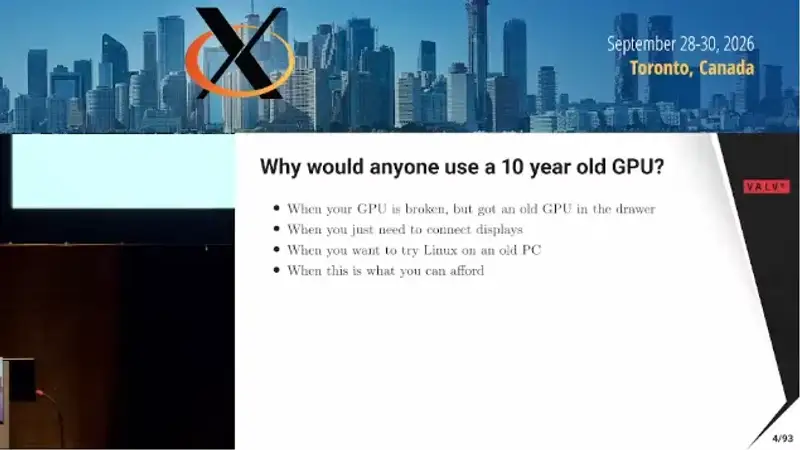
Valve engineer improves Linux support for older AMD GPUs

Timur Kristóf’s AMDGPU driver work improves support for decade-old GCN 1.0 and 1.1 cards, including display, power management, and driver functionality. It is a useful example of extending modern kernel-driver support across aging hardware.

  • WhatAMDGPU kernel-driver work by Valve's Timur Kristóf improves Linux support for decade-old GCN 1.0/1.1 GPUs and APUs.
  • HowMoving the cards from the legacy Radeon driver required fixes to display code and power management, plus soft reset support.
  • Why it mattersThe modern driver unlocks RADV Vulkan and better performance and functionality, making older cards more viable for Linux gaming.

Original · phoronix.com HN 234 pts · 27 comments

Notes & discussion

Cloud & infra

5 stories Topic page →

gVisor’s CNCF donation shifts the project to foundation governance

Google’s donation of gVisor, including its name and trademarks, was accepted by CNCF, changing the project’s governance model. Teams relying on this container isolation layer should watch how its stewardship develops.

  • What- Google is donating gVisor, including its name and trademarks, to the Cloud Native Computing Foundation.
  • How- The project will add non-Google maintainers with merge permissions, then move toward governance with organization-based voting.
  • Why it matters- Some users see performance degradation on I/O-intensive workloads; the project says upstream performance patches were rejected while it was wholly Google-owned.

Original · gvisor.dev 6 min read Lobsters 44 pts · 7 comments

Notes & discussion

Databases

2 stories Topic page →

Guide

Two stacks support sliding-window aggregation without an inverse

The piece introduces a two-stack approach for repeated window summaries such as minima, quantiles, and approximate unique counts, where removing an item cannot be handled by an inverse. This is a useful pattern for streaming and telemetry systems.

  • WhatA two-stack algorithm maintains sliding-window aggregates for associative operators that have no inverse.
  • HowIt generalizes aggregation with empty(), unit(), combine(), and finalize(); the simpler two-stack method is amortized O(1).
  • Why it mattersIt supports summaries such as minimum, quantile, and approximate unique count, avoiding failures from inverse-based updates such as NaN persisting after it leaves a window.

Original · orlp.net 6 min read Lobsters 20 pts · 3 comments

Notes & discussion

Security

3 stories Topic page →

Tool

Rust WebP decoder aims to improve memory safety and speed

The wpd decoder is written in Rust and claims better single-threaded performance and parallel scaling than libwebp, targeting a format implicated in a widely exploited memory-safety flaw. It is relevant to engineers balancing parser security and throughput.

  • Whatwpd is a Rust WebP decoder designed to improve on libwebp in memory safety and performance.
  • HowIt uses carefully scoped handwritten assembly for speed, but can be built without it; the non-SIMD code is described as verifiably memory-safe.
  • Why it mattersSafer decoding matters because image libraries process complex untrusted inputs and are used across operating systems and sandboxed browsers.

Original · halide.cx 4 min read HN 55 pts · 18 comments

Notes & discussion

Languages & tools

7 stories Topic page →

Release

Zig 0.17 reworks the build system and advances incremental compilation

Zig 0.17 includes a reworked build system with Build Server Protocol support and an enhanced ELF linker; incremental compilation is expected to work for everyone on x86_64 Linux. These changes affect build tooling and iteration speed for teams using Zig.

  • What- Zig 0.17 is a new release of the Zig programming language.
  • How- The release reworks the Build System, adds the Build Server Protocol, and enhances the ELF Linker.
  • Why it matters- The linker work is intended to make incremental compilation work for everyone on x86_64-linux.

Original · lwn.net by jzb

Notes & discussion

Practice & careers

1 story Topic page →

Essay

Stripe argues token billing belongs in cost controls, not customer-facing pricing

Stripe says token billing helps track usage, mark up costs, and protect unit economics, but that pricing should reflect customer value rather than token consumption. AI product teams can use the distinction when separating backend cost controls from product pricing.

  • What- Token billing tracks model usage and costs, but the excerpt argues it is usually a poor customer-facing pricing model.
  • How- A unified credit model lets customers draw down a shared balance, with different product operations consuming credits at different rates.
  • Why it matters- Token-level metering can still help companies manage costs and margins while invoices show product operations instead of model usage and markups.

Original · stripe.com 6 min read

Notes & discussion

Sources today: Airbnb Engineering, AWS Architecture, AWS Machine Learning, Marc Brooker, ByteByteGo, Chips and Cheese, Cloudflare Blog, Google DeepMind, Discord Engineering, Dropbox Tech, DuckDB, Figma Engineering, Google Cloud, Go Blog, Google Research, Hamel Husain, Hugging Face, Import AI, InfoQ, Jane Street Tech, Latent Space, Lobsters (AI, distributed, performance), Armin Ronacher, LWN.net, Martin Fowler, Microsoft Research, NVIDIA Technical Blog, The Old New Thing, OpenAI, PlanetScale, Postgres Weekly, The Pragmatic Engineer, PyTorch, Sebastian Raschka, Rust Blog, Shopify Engineering, Simon Willison, Stripe Engineering, Trail of Bits, GitHub (new repositories), Hugging Face trending models, Hugging Face Daily Papers, Hacker News, Hacker News (AI and systems search), Lobsters, Ollama releases, OpenAI Agents SDK releases, Transformers releases, vLLM releases. Headlines, summaries and diagrams are written by gpt-6-luna from each source's own text; links and images come from the sources themselves. Follow the link before relying on a claim.

RSS · JSON · Markdown · Pulse · Search · Previous days

Your note

Private to you. Stored in this browser, and synced to your account when you are signed in.